We are processing your request.
Please, don’t close or refresh the page.
Seattle Tickets Seattle Aquarium Ocean Pavilion

Seattle Aquarium Ocean Pavilion: What’s Inside

A guide to the Ocean Pavilion, the Seattle Aquarium’s tropical reef building, with its sharks, rays, mangroves and coral, and how to fit it into your visit.

Visit

The Ocean Pavilion is included with Seattle Aquarium admission: Seattle Aquarium tickets.

Location

1483 Alaskan Way, Pier 59, on the central waterfront. Address and directions.

Opening hours

Open 365 days a year, 9:30 a.m. to 6 p.m., last entry 5 p.m. Seattle Aquarium opening hours.

Key fact

The Reef, the largest habitat, holds nearly 500,000 gallons of water.

The Ocean Pavilion opened in August 2024 as the first step in a planned expansion of the Seattle Aquarium campus. It sits across the public plaza from Piers 59 and 60 and turns the focus from Puget Sound to the warm waters of the Coral Triangle, the reef region around Indonesia, the Philippines and Malaysia.

The building is about 50,000 square feet and holds more than 5,000 animals and plants, including sharks, rays and over 40 coral species. One ticket covers all three buildings, and you can move between them as often as you like. This guide covers each habitat in the pavilion; for food, accessibility and the rest of the campus, see our Seattle Aquarium visitor guide.

4.4
(171)

Seattle Aquarium: Entry Ticket

Highlights

Discover marine species native to the Pacific Northwest and the South Pacific.

Experience a 360-degree underwater dome showcasing local aquatic life.

Wander through the new Ocean Pavilion with vibrant tropical reefs.

Interacting with touch pools featuring starfish and sea urchins.

Engage with aquarium staff who provide insights on animals and conservation.

Seattle Aquarium Ocean Pavilion: key facts

The Ocean Pavilion opened in August 2024 and covers about 50,000 square feet.

It holds more than 5,000 animals and plants from the Coral Triangle, including over 40 coral species.

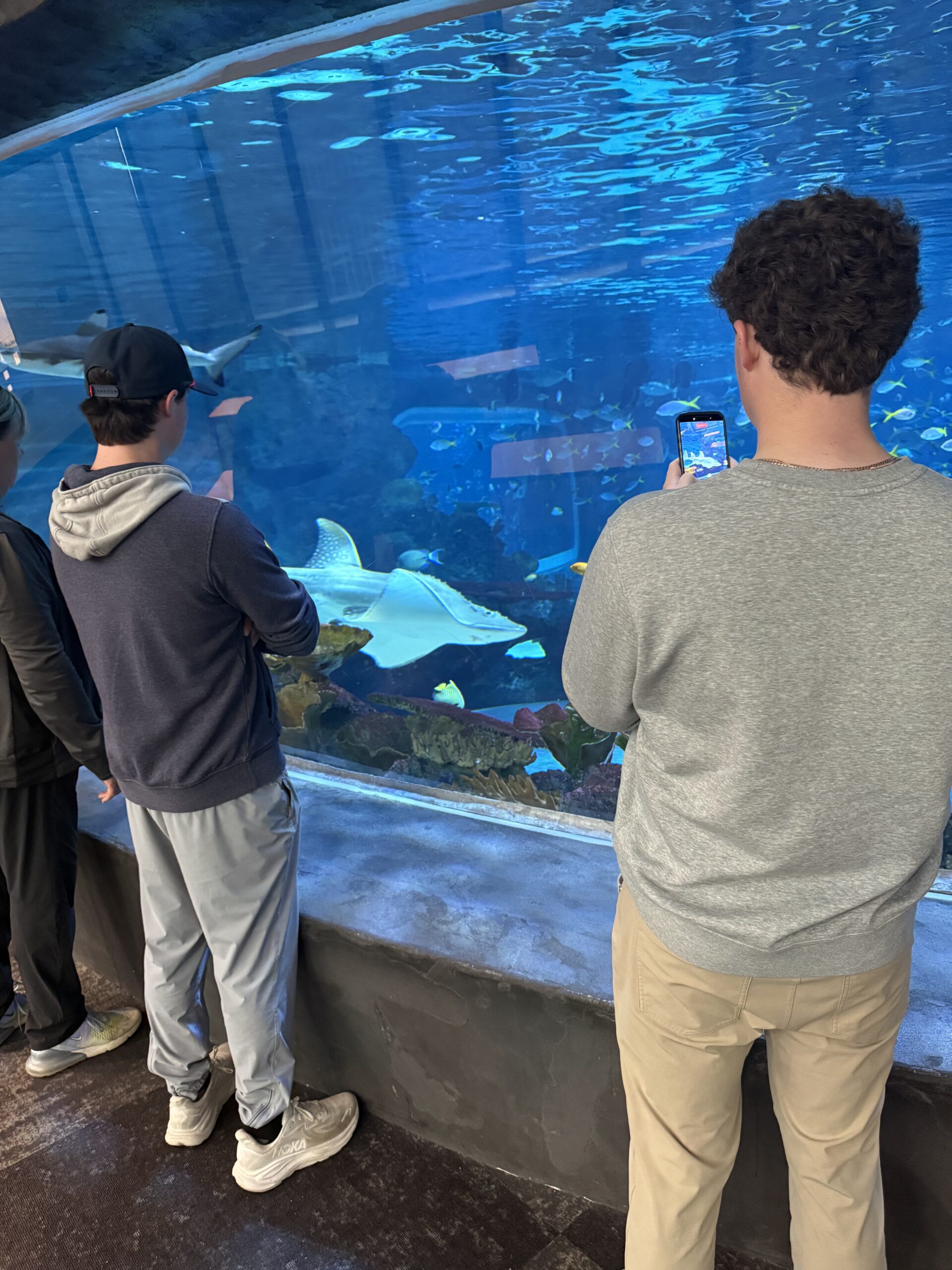
The Reef, its largest habitat, holds nearly 500,000 gallons and is home to spotted eagle rays, bowmouth guitarfish and Indo-Pacific leopard sharks.

The building runs without fossil fuels, recirculates nearly all of its salt water and is LEED Gold certified.

Admission includes the whole campus: Pier 59, Pier 60 and the Ocean Pavilion, with re-entry during your visit.

A free overhead view into The Reef is open to everyone from the outdoor plaza.

The Reef: sharks, rays and a multi-story canyon

  • The Reef is the pavilion’s largest habitat. It is built as a multi-story underwater canyon that you see from above, across and below, and it holds nearly 500,000 gallons of water.

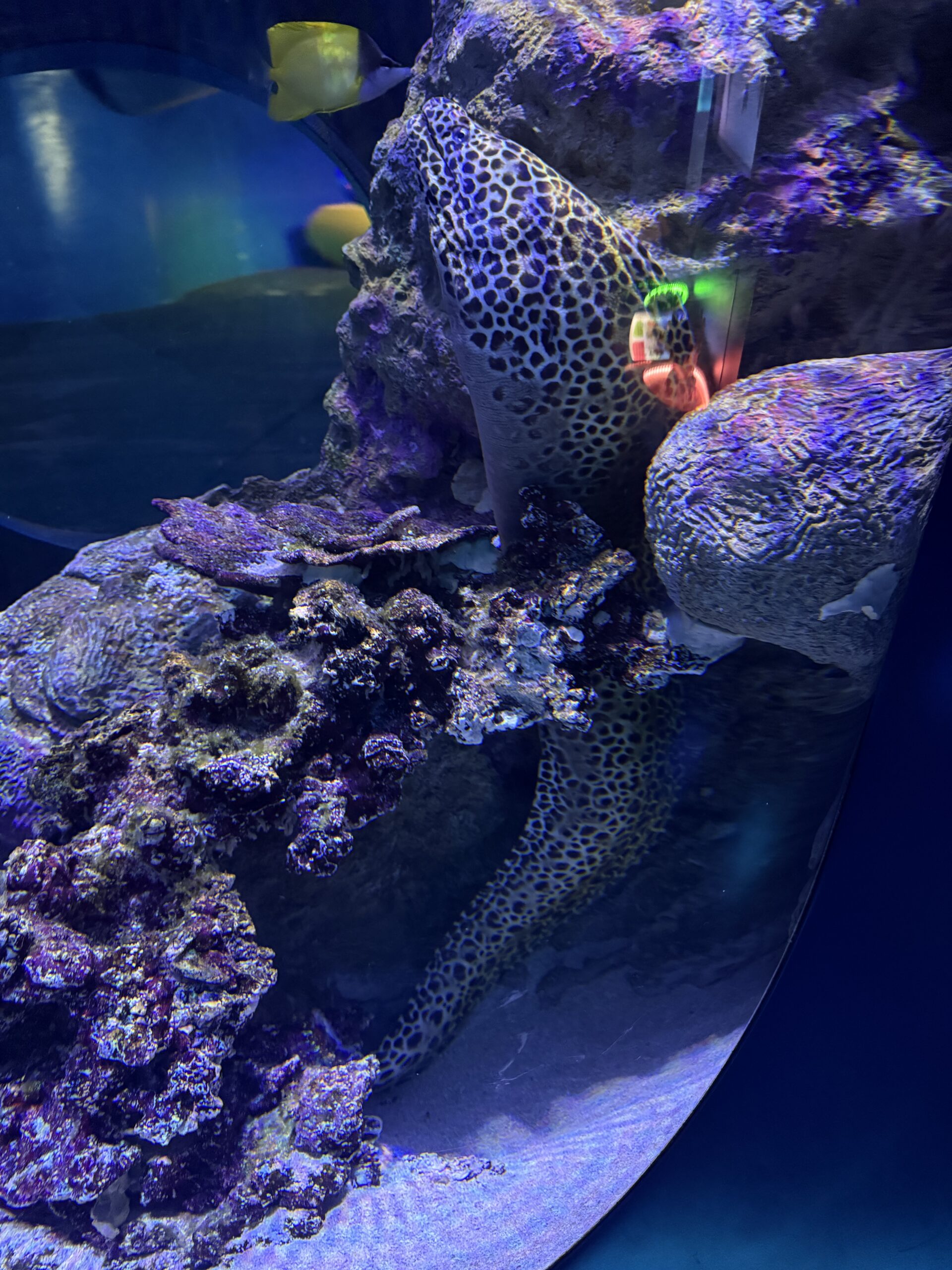
    Look for spotted eagle rays, bowmouth guitarfish and Indo-Pacific leopard sharks, along with goatfish, squarespot anthias and a moray eel. The Indo-Pacific leopard shark is part of the aquarium’s species recovery work, so the animals here are connected to conservation programs as well as display.

    The curved windows let you stand right at the glass, and the second-floor windows give different angles on the same water. Daily talks and hands-on shark and coral stations run beside the habitat.

The Archipelago: mangroves above, coral below

The Archipelago is a two-level habitat that shows what happens where land meets a tropical sea. Above the surface, a mangrove forest grows from the water; below it, a coral reef and a mangrove lagoon hold fish, sea stars and coral.

Because the habitat is split across two floors, it is worth seeing twice: once from the upper level to look at the mangrove roots and canopy, and again from below to watch the reef life. Staff give Archipelago talks twice a day, and the Tropical Reef talks at The Reef run several times between morning and late afternoon.

One Ocean Hall and At Home in the Ocean

One Ocean Hall is the central atrium of the pavilion. A ring of projectors fills it with 360-degree video and floor projections of marine ecosystems, including a digital mangrove forest filmed in Indonesia, and staff lead short talks and features here.

At Home in the Ocean is a set of smaller habitats for clownfish, seahorses and leaf scorpionfish. It includes the Coral Reef Encounter, a crawl-through space sized for younger visitors, with touch screens that identify the species in front of you.

Animal Care Area, Discovery Lab and art

  • The Animal Care Area puts behind-the-scenes work on view. Staff can treat animals on-site, and visitors can watch part of the wellbeing work that keeps the habitats healthy. Next to it, the Discovery Lab hosts expert-led, hands-on activities.

    Art runs through the building. At the entrance is a glass installation by Lummi artist Daniel Joseph Friday, and inside you will find canoe paddles by Indigenous carvers from the Pacific Northwest, Alaska, Samoa and the Indo-Pacific, plus a seasonal migration wheel of the Salish Sea by Paige Pettibon.

    On the rooftop, oysters are carved into the concrete and sandblasted images by Owen Oliver sit among native plantings, with views over Elliott Bay.

How the pavilion fits with Piers 59 and 60

The Seattle Aquarium campus has three buildings. Pier 59 holds the Pacific Northwest habitats, including Window on Washington Waters, the touch pools and the giant Pacific octopus, and the café on its second floor serves food daily from 10 a.m. to 4 p.m.

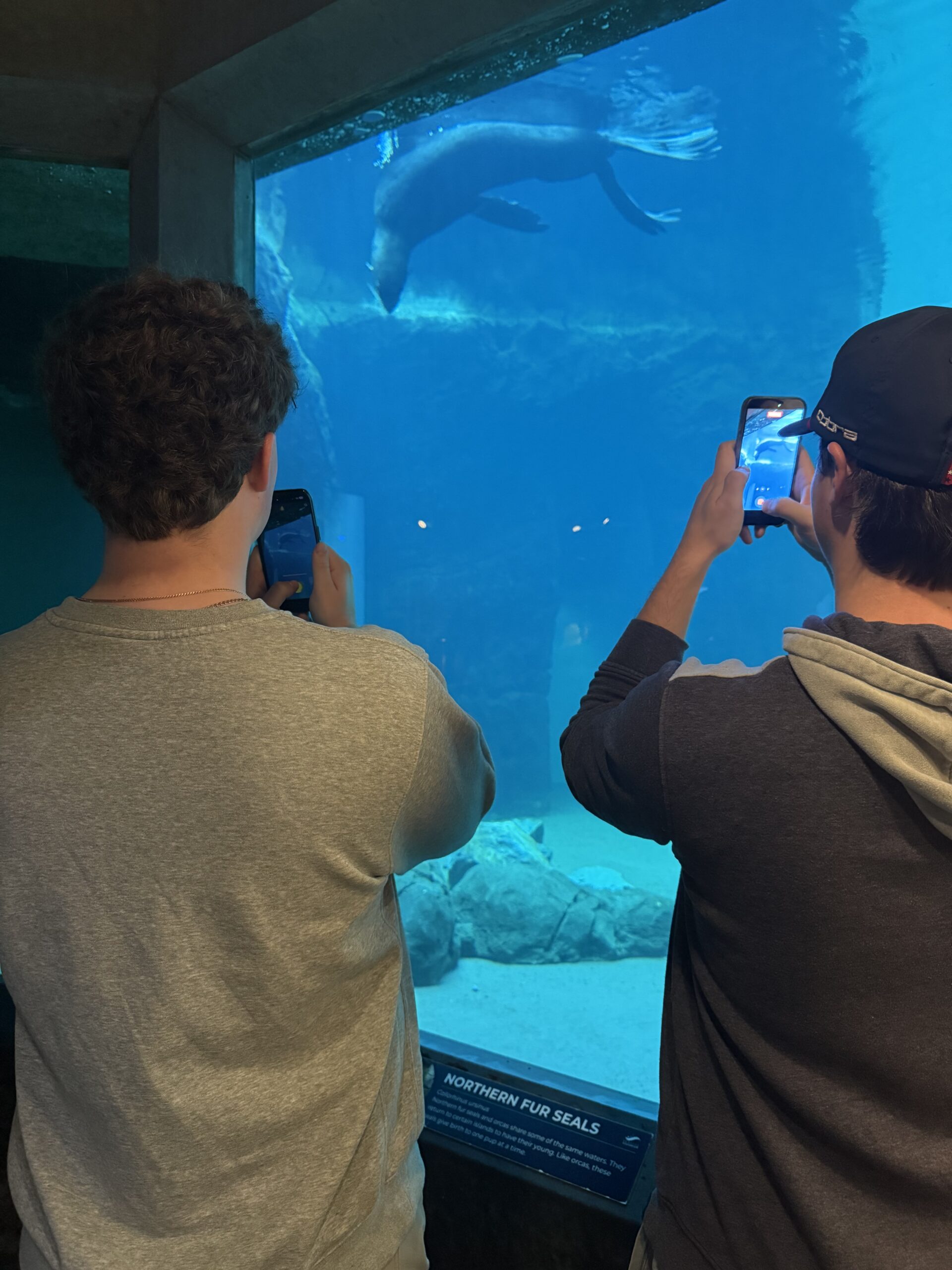
Pier 60, linked to Pier 59 by a breezeway, is home to the marine mammals: harbor seals, northern fur seals and sea otters, plus the Underwater Dome. The Ocean Pavilion stands across the public plaza.

Your ticket is scanned each time you enter Pier 59 or the Ocean Pavilion, and you can re-enter the buildings as many times as you like during your visit. An accessible pedestrian route with gentle ramps and a public elevator links the waterfront park, the Overlook Walk and Pike Place Market.

Good to know before you go

Timed entry: buying ahead secures an entry time; walk-up tickets are limited.

Accessibility: habitats and restrooms are wheelchair-accessible, and wheelchairs can be borrowed at Guest Services in Pier 59 and the Ocean Pavilion, first come, first served.

Sensory needs: the aquarium is a certified sensory-inclusive facility.

Sustainability: the pavilion runs without fossil fuels and recirculates nearly all of its salt water.

Free view: the outdoor plaza gives an overhead look into The Reef without a ticket.

Weather: the campus mixes indoor and outdoor areas, so bring a layer for the walk between buildings.

When to see the Ocean Pavilion

Because re-entry is unlimited, you can split the pavilion into two short visits: one at the start, when you have the most energy for The Reef and the Archipelago, and one later to catch a talk you missed. In between, cross back for the Pier 59 habitats and the marine mammal talks on Pier 60.

The aquarium is open until 6 p.m. with last entry at 5 p.m. Hours are shorter on Thanksgiving and Christmas Eve, so check our opening hours guide before a holiday visit and choose your time with the ticket options on this page.

Seattle Aquarium Ocean Pavilion: frequently asked questions

Is the Ocean Pavilion included in Seattle Aquarium admission?

Yes. A Seattle Aquarium ticket covers the whole campus: Pier 59, Pier 60 and the Ocean Pavilion. You can move between the buildings and re-enter as often as you like during your visit.

When did the Seattle Aquarium Ocean Pavilion open?

The Ocean Pavilion opened in August 2024. It was the first step in a planned expansion of the aquarium campus on the central waterfront.

What animals are in the Ocean Pavilion?

The pavilion holds more than 5,000 animals and plants from the Coral Triangle. Highlights include spotted eagle rays, bowmouth guitarfish, Indo-Pacific leopard sharks, clownfish, seahorses, leaf scorpionfish and over 40 coral species.

Are there sharks at the Seattle Aquarium?

Yes. Indo-Pacific leopard sharks live in The Reef, the largest habitat in the Ocean Pavilion. Bowmouth guitarfish, a type of ray with a shark-like body, share the same habitat.

How big is The Reef habitat?

The Reef holds nearly 500,000 gallons of water. It is built as a multi-story canyon that you can see from above, across and below.

Can you see the Ocean Pavilion for free?

You can look down into The Reef from the outdoor plaza without a ticket. The habitats inside the building, including the windows into The Reef, require admission.

Where is the Ocean Pavilion?

The Ocean Pavilion stands across the public plaza from Piers 59 and 60 at 1483 Alaskan Way. The Overlook Walk links this part of the waterfront to Pike Place Market.

How long does a Seattle Aquarium visit take with the Ocean Pavilion?

Plan for a couple of hours to see the whole campus, including the Ocean Pavilion. Add time if you want to catch the talks at The Reef, the Archipelago and the marine mammal habitats on Pier 60.

Is the Ocean Pavilion good for young children?

Yes. At Home in the Ocean has kid-sized habitats and the Coral Reef Encounter, a crawl-through space for younger visitors. Touch screens there identify the species in each habitat.

Is the Ocean Pavilion wheelchair accessible?

Yes. Habitats and restrooms are wheelchair-accessible, and wheelchairs can be borrowed at the Guest Services desk in the Ocean Pavilion or Pier 59, first come, first served.

About this guide

Sources: Seattle Aquarium, Ocean Pavilion; Seattle Aquarium, Plan Your Visit; Seattle Aquarium, Hours, Discounts and Groups; GeekWire, Inside Seattle Aquarium’s new Ocean Pavilion (2024); ParentMap, Seattle Aquarium’s new Ocean Pavilion (2024).

This website offers official tickets for the venues listed, sold by Tourism Tickets. Please note, however, that it is not the official website of any of these venues.

The images and videos on this website may contain visual elements that have been created or enhanced using AI technology. They are provided for illustrative purposes only.